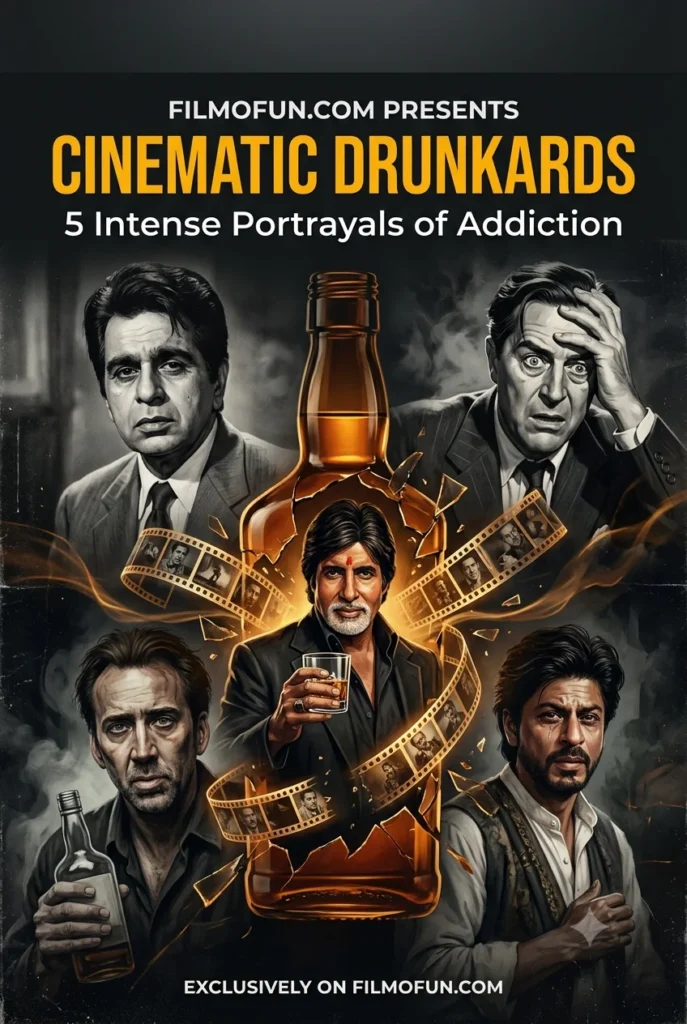

Cinematic Drunkards: How 5 Legendary Actors Redefined Addiction on Screen
The portrayal of addiction on the silver screen has given us some of the most raw, emotionally devastating performances in film history. When a character turns to the bottle, it is rarely just about the drink; it is a physical manifestation of grief, societal rebellion, or existential despair. To truly understand this archetype, we must analyze the cinematic drunkards who defined the trope. From the tragic, self-sacrificing lovers of classic Indian cinema to the uncompromisingly grim realists of Hollywood, these roles demand an extraordinary level of psychological vulnerability from the actors who inhabit them.
The Masterclasses in Addiction: 5 Iconic Performances
-
Shankar in Daag (1952)
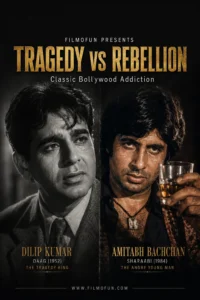
In the vintage classic Daag, Dilip Kumar delivers a haunting performance as Shankar, an impoverished clay toy-maker driven to severe alcoholism by crushing poverty, social humiliation, and a seemingly hopeless love. Dilip Kumar, widely regarded as the “Tragedy King,” treats the character’s dependency with profound gravity rather than comedic caricature. His portrayal is exceptionally intense because he captures the internal rot of shame; his slurred speech and heavy, sorrowful gaze reflect a man trapped in a vicious cycle of self-hatred. It stands as one of the earliest, most dignified explorations of substance reliance in South Asian film.
-
Don Birnam in The Lost Weekend (1945)
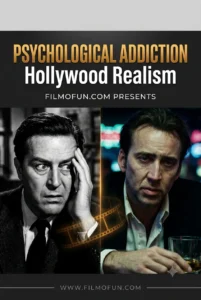
Billy Wilder’s groundbreaking drama features Ray Milland as Don Birnam, a frustrated New York writer locked in a desperate battle with his own mind. Milland’s Academy Award-winning performance stripped away the contemporary Hollywood trend of treating drunk characters as comic relief, offering instead a terrifyingly authentic look at chronic illness. The intensity here is psychological and frantic—watch the sheer panic in Milland’s eyes as he frantically searches his apartment for hidden bottles or walks miles down Third Avenue just to pawn his typewriter for a single drink. It remains a masterclass in capturing the agonizing withdrawals and paranoia of the disease.
-
Vicky Kapoor in Sharaabi (1984)
Shifting from tragic realism to flamboyant rebellion, Amitabh Bachchan embodies Vicky Kapoor in the blockbuster Sharaabi. The estranged son of a cold, multi-millionaire industrialist, Vicky uses alcohol as both an emotional shield against severe loneliness and a weapon to mock high-society hypocrisy. Bachchan’s performance is a masterclass in physical acting—maintaining a permanent, heavy-lidded sway and a uniquely slurred, rhythmic delivery while keeping the character’s moral compass perfectly sharp. The intensity here lies in the suppressed rage beneath the wit; Bachchan ensures that even during moments of brilliant comedy, Vicky’s deep-seated yearning for parental love is palpably heartbreaking.
-
Ben Sanderson in Leaving Las Vegas (1995)
Perhaps the most uncompromising and nihilistic portrayal of cinematic drunkards ever filmed, Nicolas Cage stars as Ben Sanderson, a Hollywood screenwriter who has lost everything and deliberately heads to Nevada to drink himself to death. Cage’s Oscar-winning performance is an absolute tour de force of physical and emotional degradation. He balances wild, unpredictable bursts of manic energy with quiet, trembling moments of absolute physical decay. It is an intensely painful watch because Cage strips away any romanticized notion of recovery or Hollywood redemption, fully committing to the harrowing, ugly reality of terminal end-stage alcoholism.
-
Devdas Mukherjee in Devdas (1955 & 2002)
The ultimate archetype of the fatalistic lover, Devdas represents a slow, deliberate descent into self-destruction. In the 1955 version, Dilip Kumar plays Devdas with a quiet, poetic, and deeply internalized grief, where every sip feels like a step toward a chosen grave. In stark contrast, Shah Rukh Khan’s 2002 portrayal in Sanjay Leela Bhansali’s opulently staged adaptation elevates the intensity to a theatrical, operatic pitch. Shah Rukh Khan captures the erratic, volatile nature of a proud aristocrat crumbling under the weight of his own arrogance and heartbreak, making his physical collapse incredibly vivid and operatic. Both actors brilliantly showcase how the character uses the bottle as the ultimate weapon of romantic martyrdom.
A Comparative Analysis of Cinematic Drunkards
To see how these iconic figures stack up against one another, we can break down their underlying motivations, narrative styles, and the specific nature of their physical and emotional intensity.
| Character & Movie | Root Cause of Addiction | Performance Intensity Style | Core Narrative Function |
| Shankar (Daag) | Social humiliation & poverty | Quiet, internalized, shame-driven | Tragic melodrama & eventual redemption |
| Don Birnam (The Lost Weekend) | Creative failure & self-doubt | Frantic, paranoid, psychologically raw | Grim clinical realism and awareness |
| Vicky Kapoor (Sharaabi) | Parental neglect & isolation | Controlled, charismatic, physically stylized | Anti-establishment heroism & moral truth |
| Ben Sanderson (Leaving Las Vegas) | Total existential despair | Volatile, physically degrading, absolute | Uncompromisingly bleak nihilism |
| Devdas (Devdas ’55 / ’02) | Romantic separation & pride | Tragic poetry (Dilip) / Operatic volatility (SRK) | Romantic martyrdom & self-destruction |
Decoding the Aesthetic Legacy of Cinematic Drunkards
Ultimately, from an examination of these five phenomenal portrayals, it is evident that film rarely employs the bottle for the sake of vice alone. In terms of the Hollywood realism perspective or the emotional landscape of Indian cinema, it is clear that each of these actors was able to turn the character of a substance abuser into an exploration of the human spirit. It is in the process of unraveling the structural, social, and aesthetic elements of these legendary cinematic drunkards that we can truly decode the depths of cinematic alcoholism.