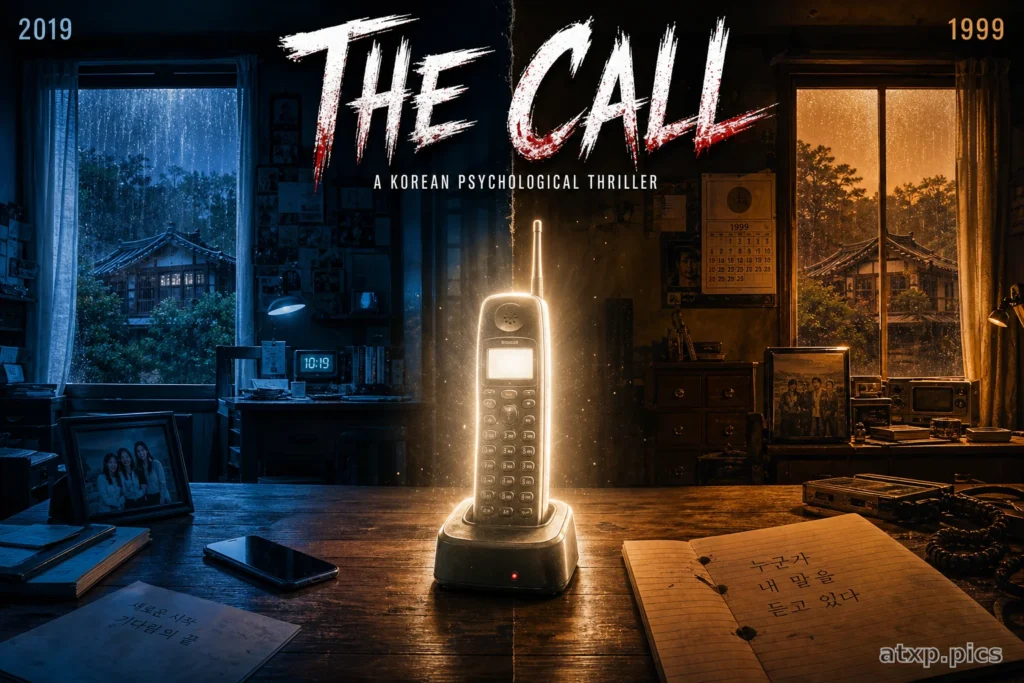

The Call Movie Review

Can the Past Kill You? Quantum Physics, London’s Edgware Road, and The Call
Imagine standing on London’s famous Edgware Road on a cold, rain-soaked evening. The air carries that unmistakable British chill, while the glowing screens of the ODEON Cinema flicker against the wet pavement. Thousands of filmgoers cross paths here every hour, looking for an escape; perhaps clicking through a The Call movie review on their phones before stepping inside, each person carrying invisible histories, regrets, and unfinished possibilities.
And if you pause for even a moment to think about the true nature of reality, your mind begins to spiral.
In quantum physics, there exists a theory known as the Many-Worlds Interpretation — the unsettling idea that our universe may not be the only version of reality. According to this concept, every decision you make creates a split. Every road not taken continues somewhere else in another universe.
Picture yourself standing at a movie theater ticket counter.
Screen One is playing Inception.
Screen Five is showing the South Korean psychological thriller The Call.
You choose Inception.
But somewhere, at that exact same instant, another version of you walks into Theater Five instead.
In one universe, your regrets remain regrets.
In another, they become reality.
Inn The Call Movie Review we see that terrifying possibility forms the philosophical heartbeat of the South Korean masterpiece, The Call; except this film takes the idea one step further. In quantum theory, parallel worlds quietly coexist. In The Call, they begin consuming each other.
That terrifying possibility forms the philosophical heartbeat of The Call — except this film takes the idea one step further. In quantum theory, parallel worlds quietly coexist. In The Call, they begin consuming each other.
When the Past Refuses to Stay Buried
At its core, The Call asks a horrifying question:
What if the past could call you directly?
The story revolves around two women connected through a mysterious cordless phone inside the same isolated house — except they live twenty years apart.
Seo-yeon exists in 2019.
Young-sook lives in 1999.
Through the phone, time collapses.
At first, their connection feels almost miraculous. They help one another. They exchange information. A single action in the past suddenly resurrects Seo-yeon’s dead father in the present. Reality itself begins rewriting its own code before our eyes.
And that is precisely the moment where the film transforms from a fantasy into a nightmare.
The Call Movie Review Analyzes The Butterfly Effect as Psychological Horror
What makes The Call extraordinary is not just its concept, but the terrifying logic with which it executes that concept.
Time in this film behaves like stretched fabric. Pull one thread, and the entire structure distorts.
This is the Butterfly Effect weaponized into horror.
A tiny alteration in 1999 instantly mutates reality in 2019. Wounds disappear from bodies. Furniture changes shape. Entire memories are erased and rewritten like corrupted computer files. Watching these transitions unfold feels less like observing a movie and more like surviving a collapse in reality itself.
The film delivers a brutal truth:
Every miracle comes with a price.
When you attempt to repair the past, you may also unleash the very catastrophe that destroys your future.
Violence, Madness, and One of Korean Cinema’s Most Terrifying Villains
The Call is not merely a science-fiction thriller. It is a deeply unsettling psychological crime film driven by dread, violence, and emotional instability.
The true force of the movie lies in Young-sook — a villain so unpredictable and emotionally feral that she rivals some of the greatest antagonists modern cinema has produced. Her rage doesn’t merely threaten the present; it invades it across decades.
And once the film begins tightening its grip, it barely allows the audience room to breathe.
Its editing is razor-sharp. Its sound design creeps through scenes like fog rolling down an empty London alleyway at midnight. Silence itself becomes threatening.
Although the film holds a respectable IMDb rating of 7.1, it honestly deserves far greater recognition for the precision of its tension and the intelligence of its structure.
Final Verdict: Is The Call Worth Watching?
If you’ve read this far into The Call movie review, it is clear that if films like Inception or Tenet fascinate you — stories that challenge your perception of time, memory, and reality — then The Call is essential viewing.
But unlike many cerebral thrillers, this film doesn’t merely confuse your mind.
It attacks your nerves.
By the end, you may find yourself questioning whether the peace you enjoy today exists only because certain horrors in your past remained untouched.
And perhaps that is the film’s darkest idea of all:
The past is a graveyard.
Some secrets were buried there for a reason.
And maybe we should never try calling them back.
Are you entirely certain your reality isn’t already being rewritten?